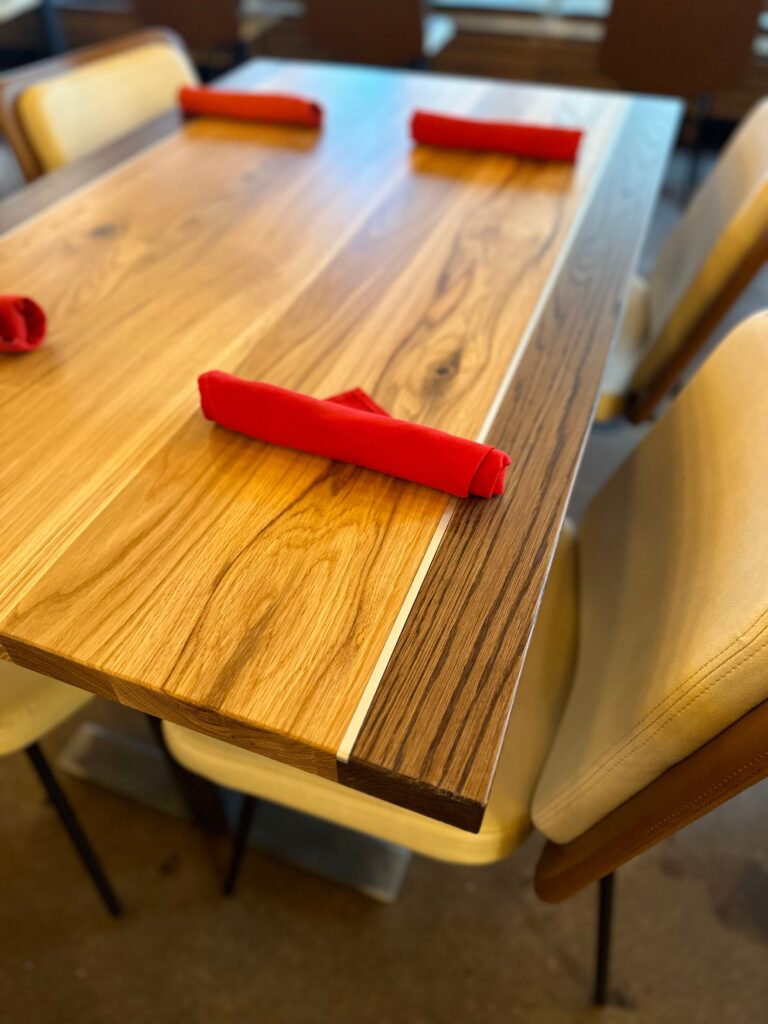
Restaurant tables should maximize space, Conversation flow, and create an intimate dining experience
Choosing the right restaurant tables isn’t just about looks — it’s about guest comfort, server efficiency, and maximizing the number of covers you can turn each night. The right restaurant table size and layout support food flow, accessibility, and the vibe you want to create. Here’s a simple, practical guide to help you pick the best tables for restaurant seating so guests stay comfortable and staff can work efficiently.
Standard table heights and why they matter
Most restaurants use two standard table heights:
- Dining height (standard): ~28–30 inches (71–76 cm). This is the most common height for banquettes and freestanding tables and works with most dining chairs.
- Counter/Bar height: ~34–36 inches (86–91 cm). Used for high-top seating, bars, and casual dining spots.
Why this matters: mismatched chairs and table heights make guests uncomfortable and slow service. When planning, test the chair-to-table relationship before you order dozens of tables.
Picking the right restaurant table size for your layout
Restaurant table size depends on how many guests you want to seat at each setting and how much walk space you need for servers. Common top sizes:
- 24” round / 60 cm — comfortable for 2 people (tight for 3).
- 30” round / 75 cm — good for 2 and works for cozy booths.
- 36” round / 90 cm — ideal for 3–4 guests.
- 48” round / 120 cm — seats 4 comfortably, or 6 if needed.
- 24” x 24” square / small bistro — 2 guests.
- 30” x 30” or 30” x 36” rectangular — 2–4 guests depending on layout.
- 48” x 30” rectangular — common family or booth tables for 4.
Aiming for variety helps: a mix of 2-tops, 4-tops, and a few flexible larger tables lets you adapt to changing covers and reservations.
Spacing & circulation: not optional
To keep service smooth, follow spacing rules:
- Allow at least 24–30 inches (61–76 cm) between table edges for comfortable passing.
- Minimum aisle width: 36 inches (90 cm) for back-of-house traffic; 48 inches (122 cm) is better in busy sections.
- Chair clearance: allow 18–24 inches (46–61 cm) behind chairs for guests to stand and for servers to work.
Crowded tables might squeeze covers in the short term but will slow turns and hurt guest experience — costing you revenue over time.
Material & durability for tables for restaurant use
Tables in a restaurant must survive spills, scrapes, and heavy use. Choose surfaces and bases designed for commercial wear:
- Solid hardwood or high-pressure laminate for easy maintenance.
- Sealed finishes resist stains and are easier to sanitize.
- Sturdy bases (pedestal or heavy metal legs) prevent wobble and make seating flexible.
- Edge detail matters — rounded or eased edges last longer in high-traffic settings.
Also consider weight: heavier tops are stable but harder to move during turnover; lightweight tops are easy to reconfigure but need solid bases.
Flexibility & turnover: design for service
If your concept requires fast turns or varying party sizes, pick tables for restaurant that reconfigure easily:
- Nesting tables, two-piece tops, or foldable leaves let staff combine or split seating quickly.
- Standardized heights across different table shapes mean you can swap tops without swapping chairs.