Table Techniques: The versatile plank style table
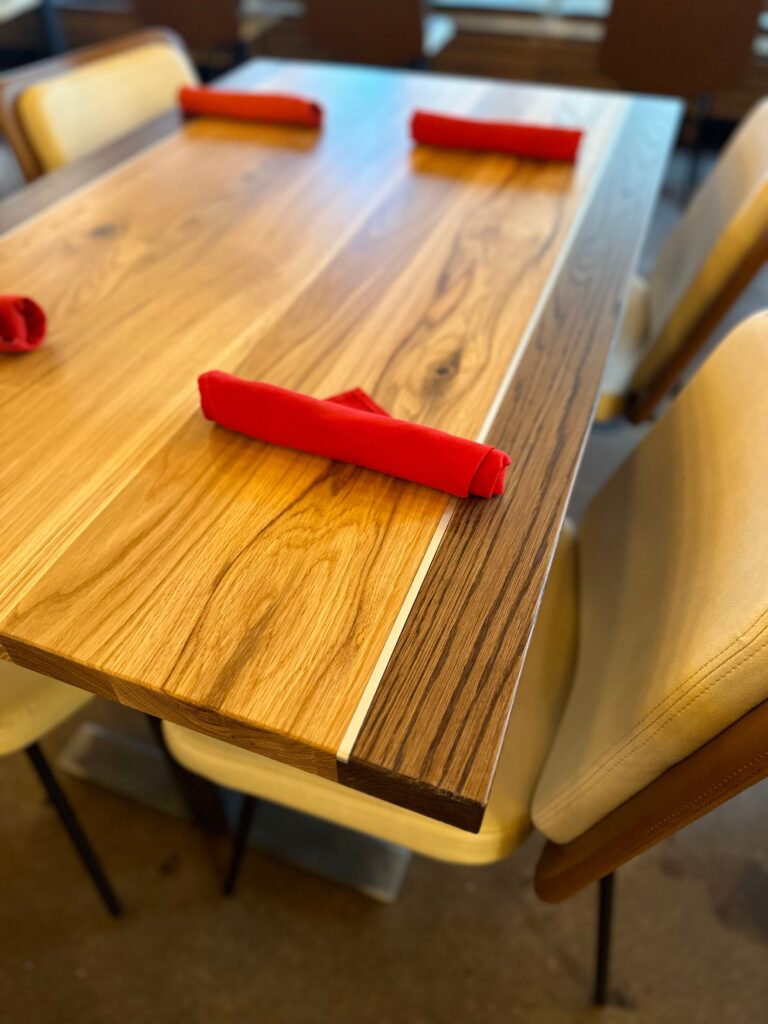
A walnut and white oak plank style table top with metallic inlay. Built for Gordon Ramsey Burger.
Plank style tables are one of the most common tables SouthLoft makes for both commercial and residential applications. While plank style construction is a foundational technique, it has versatility and many ways to create uniqueness in every one. In this edition, you’ll see how SouthLoft fabricators build plank-style tables, explore different shapes, and discover what customization makes possible.
How we make plank style tables

Stacks of walnut staves milled for a new table
From rough lumber to perfectly square planks
The first step in the process of building a plank style table is sourcing the right material and starting the process of milling the lumber. Fabricators then select which boards we will use based on the overall length of the finish product. The boards are then cut to rough length before the next step in the milling process.
After all of our hardwood planks are cut to rough lengths, it is time to make sure the board is perfectly square. This is a crucial step in making sure the planks can be glued together in later steps. To begin, fabricators square up one edge. Rotating through three different tools (jointer, planer, and straight-line rip saw), the piece ends up with all four faces being square.
Gluing up the panel
Now that we know the planks are square, they are ready for glue and clamps. Fabricators load up clamp racks with staves, while ensuring that the edges are covered in glue. Once the required width is met they are clamped and left for the glue to cure.
Finalizing the panel
After the glue has cured we can finalize the size and shape of the finished table top. First, we cut the tabletop to its final length on a table saw. Next, we move it to our belt sander to bring it to its final width. If the design calls for any shaping beyond a square or rectangle, we cut the tabletop on our CNC machine for precise results.

A batch of circular plank-style tables is moving through the finishing process.
Finishing the table top
Finishing is the final part of the process. From protective clear coats to one-of-a-kind finishes, our 2K acrylic polyurethane systems stand up to the rigors of a bustling restaurant and the demands of everyday life as the centerpiece of your home.
The basic shapes of plank style tables
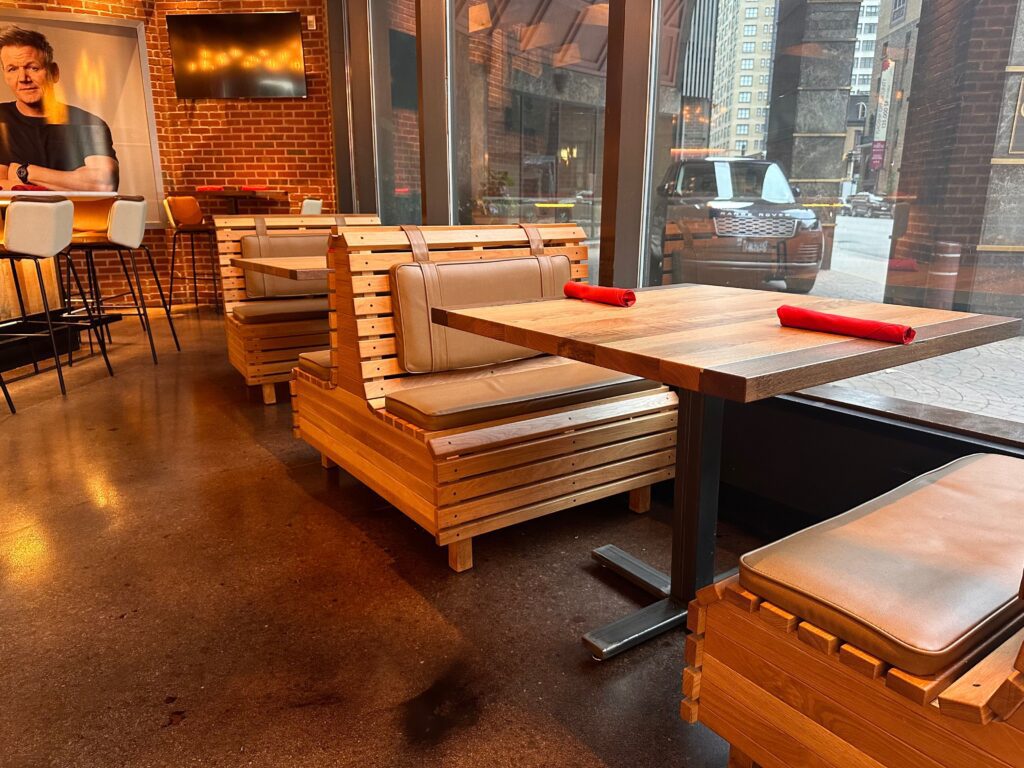
Squares
Most commonly seen in restaurants, square plank style tables work great for 2 and 4 top settings.
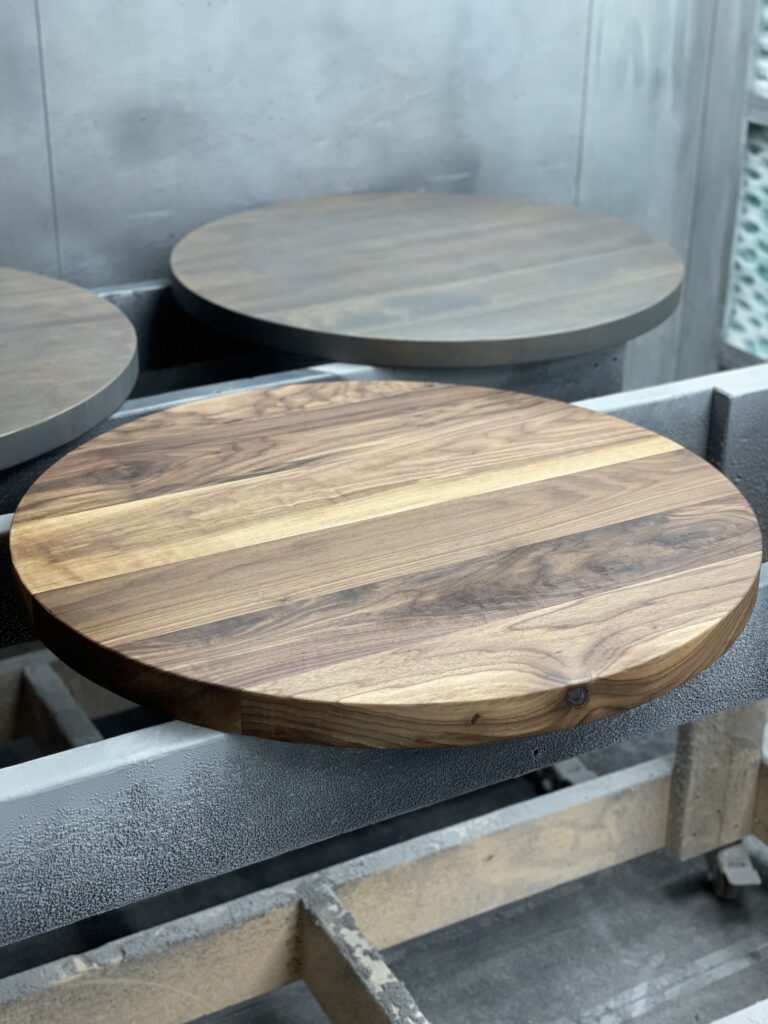
Circles
Circular tables are popular in both homes and commercial spaces. We start with a square tabletop blank and cut the round shape using our CNC machine for accuracy and consistency.

Rectangles
Rectangular is the most common table shape for both the commercial space and homes.
Beyond the basic shapes

If you’re looking for something beyond the basic shapes, plank style tables are a great option. Whatever the desired end result is, it all starts with a square or rectangle. From there we subtract material to get to the final desired shape. This technique can make a big difference in making a piece feel unique to you or your business.
How we customize plank style table tops
Material
Choosing which hardwood you’d like for your table top will make the most dramatic effect to the appearance of the finished piece. Typical materials include white oak and walnut.
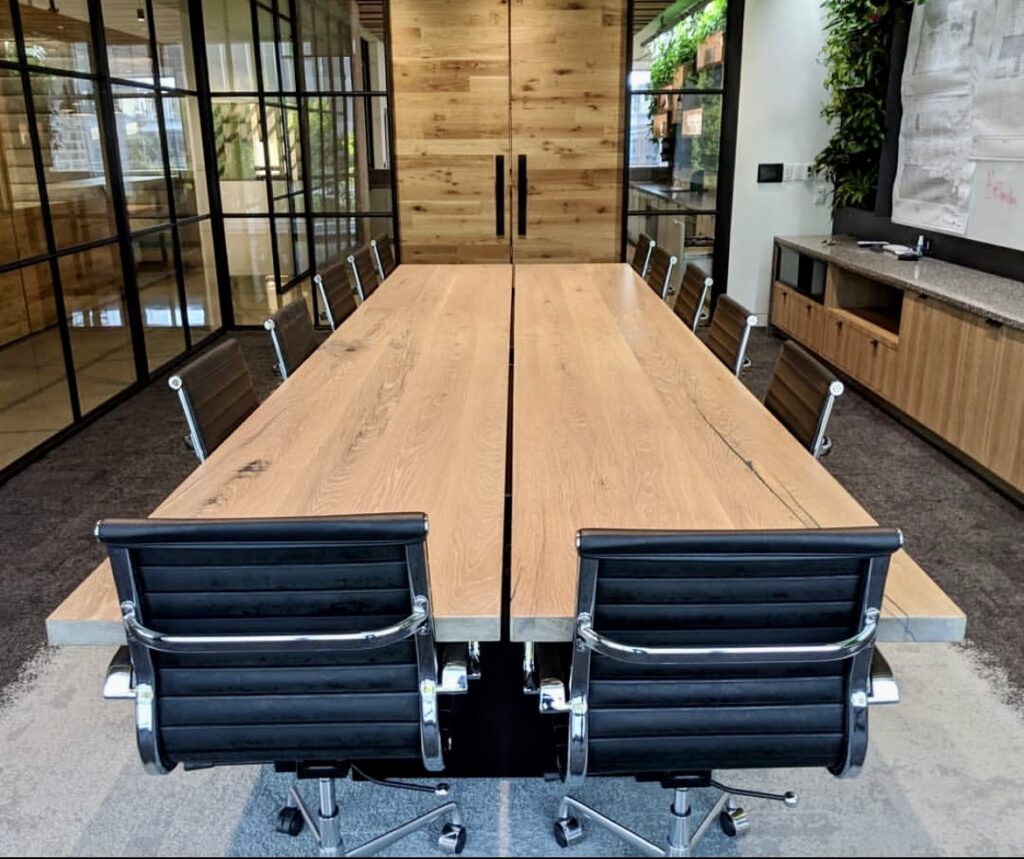
Split-top
Split-top tables feature a rectangular design made from two separate sections, creating a clean reveal down the center. A metal rod or base connects the two halves, visually tying the table together while maintaining the split-top look.
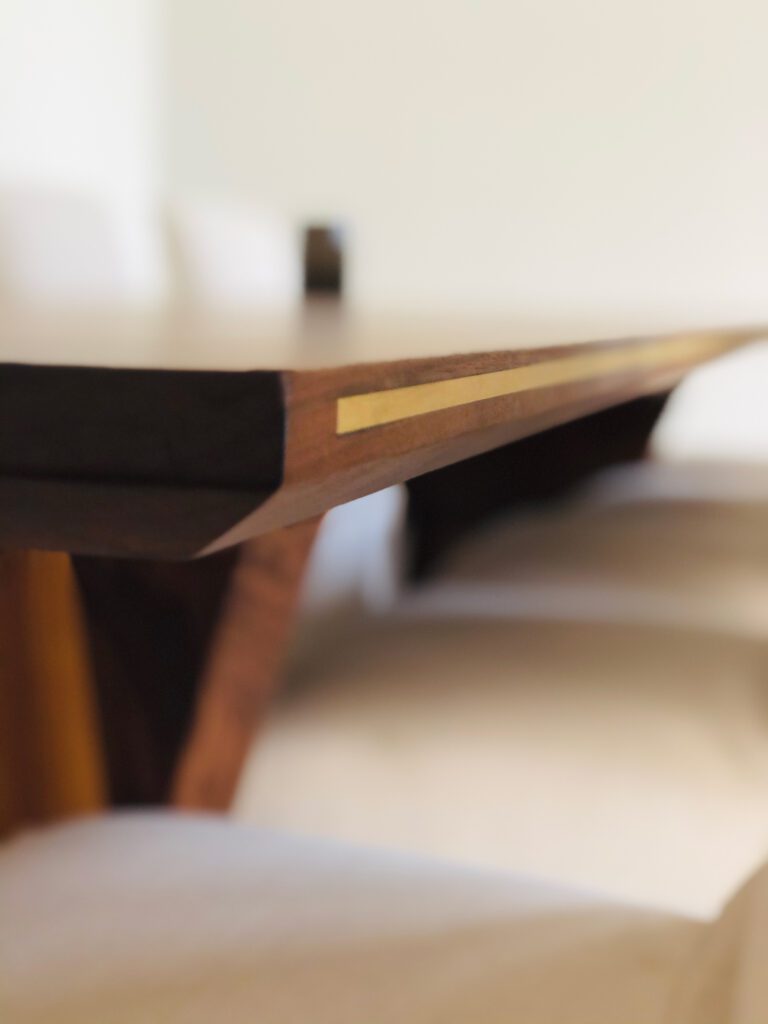
Edge profiles
From completely square to totally rounded, the edge profile of your table top can be another way to make this feel unique.
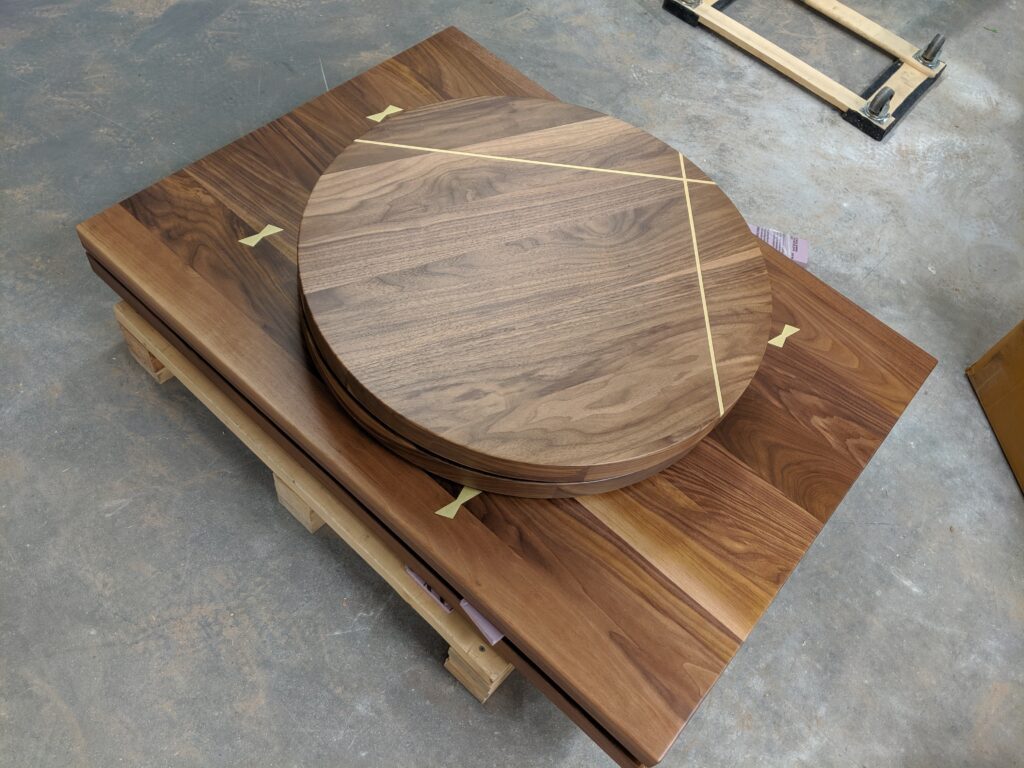
Inlays
Inlays are a great way to add flair to a table top. Between different materials and placement, there are thousands of options to utilize inlays to create a customized product.

Finishes
Finishes have a dramatic effect of the end result of a piece. SouthLoft uses a 2 part system for all finishes regardless of the desired result. The benefit being long-lasting durability for any scenario.